


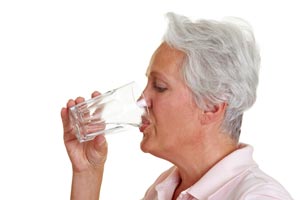
Lack of water is the number one trigger of daytime fatigue. As we age, the balance between our need for water and our thirst for water shifts. In fact, the less water an older person drinks, the less thirsty they become, leaving them open to the risk of serious dehydration and other complications.
Further, confusion over the difference between hunger and thirst intensifies over the years, making it all the more important to conscientiously drink adequate amounts of water throughout the day. One should consume at least one cup of water for every 20 pounds of body weight daily, that's around 6-8 glasses for the average person.
Exercise and warm weather both call for additional water intake to replace fluids lost through excessive perspiration. So, all those senior citizens who head south for retirement will need to increase water intake! Increased fiber intake among seniors, which is usually recommended for older people to aid with constipation and other health concerns, also increases the need for water. It is always important to be educated about the medications your loved ones are taking. Many medications that are diuretics will need more fluids to be consumed daily to avoid dehydration.
The human body is at least 50% water, of which 2-3 quarts are lost on a daily basis. Even bones are over 20% water! Even a 2% drop in body water can trigger fuzzy short-term memory, trouble with basic math and reading, and difficulty staying focused. Aside from replenishing what is lost in order to hydrate the blood and tissues, water also lubricates joints, regulates temperature, and moistens the lungs to allow for breathing. Inadequate water intake over time prevents these processes from occurring, leading to arthritis, sore muscles, heavy breathing, and a higher body temperature. This means that not drinking enough water over time can result in more severe effects at an older age, which means preventable problems during what should be the golden years. In the body, water acts as a solvent, coolant, lubricant, and transport agent. Virtually nothing takes place in the body without water playing a vital role. It is needed to regulate body temperature, carry nutrients, remove toxins and waste materials, and provide the medium in which all cellular chemical reactions take place.
Symptoms of dehydration:
- Confusion
- Chronic fatigue and lethargy
- Drowsiness
- Labored speech
- Dry mouth
- Sunken eyeballs
- Unable to urinate or pass only small amounts of dark or deep yellow urine
Senior citizens are at particular risk for dehydration because their kidney function has diminished to some degree. Side effects for seniors who do not drink enough water, however, extend far beyond dehydration. Even short-term water deprivation has been known to cause chronic pain. Over time, lack of water causes loss of muscle tone, excess weight gain, slow metabolism, increased toxicity, and even organ failure. Other negative effects include arthritis, dry skin, migraines, hypertension, digestive complications, and persistent constipation.
In order to maintain health, the kidneys must excrete a minimum of ten ounces of waste per day. When water is not available, there is nothing present in which to dissolve the body's waste products (uric acid and urea) for expulsion. As a result, they build up within the body, leading to kidney stones, while putting additional strain on the kidneys to find adequate liquid with which to expel toxins.
Considering the abundance of water in our daily lifestyles, the fact that most senior citizens are consistently dehydrated to some degree is alarming. All foods are partly composed of water; fruits and vegetables are over 75% H2O, and even bread is more than 30% water. Yet with the abundance of water in their diet, the average senior citizen still requires over two-and-a-half quarts of pure water each and every day to maintain good health. Encourage your loved ones not to wait until they are thirsty to start drinking water. At that point dehydration has already begun. Increasing your fruit and vegetable consumption is a healthy way to help keep your diet hydrated. Vegetables such as tomatoes, cucumbers, squash, lettuce, and celery are all about 90-99% water. Eating healthy has more benefits than just losing weight. It is a way to increase your energy, mood, hydration and the overall way you live your life. Eat healthy, stay hydrated, and be happy!